
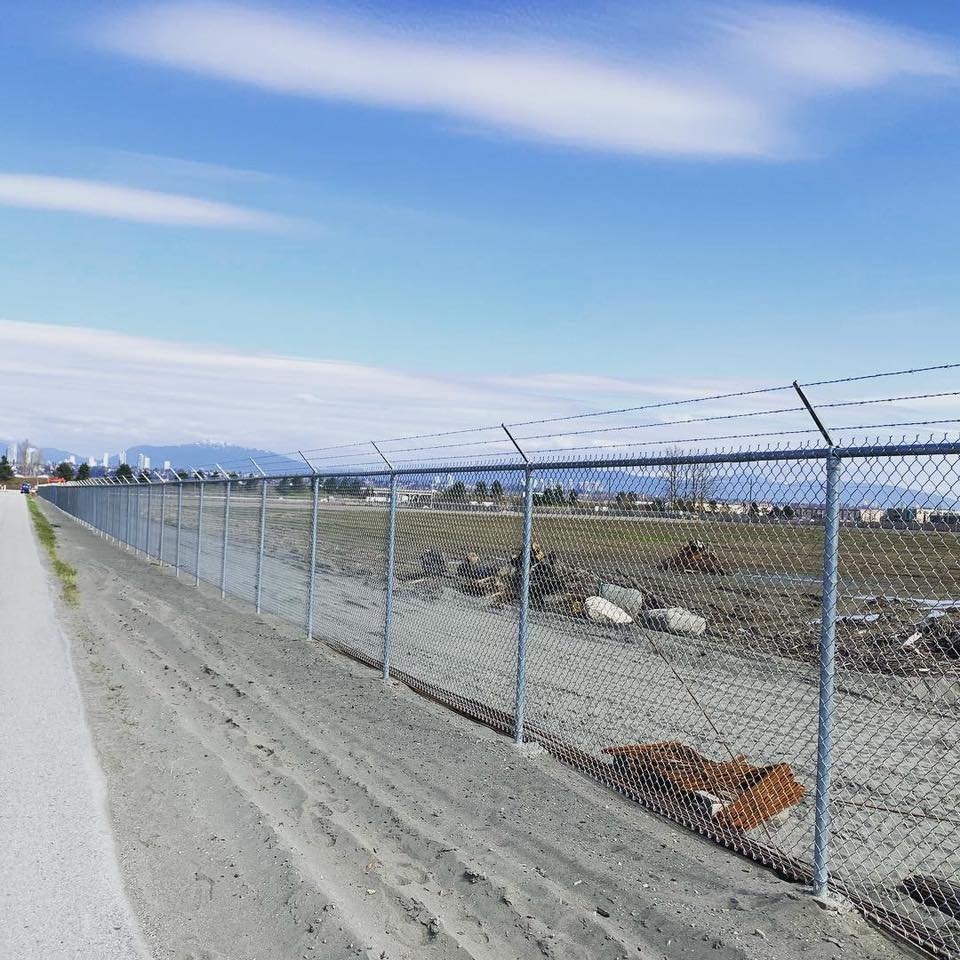
Galvanized perimeter chain link fencing from the LS Fencing project gallery.
Fence and Gate Damage: Repair or Replace?
Use this visual checklist to describe storm damage, leaning posts, torn mesh and dragging gates before requesting a repair assessment.
Repair may make sense when damage is localized and the remaining structure is sound. Replacement becomes worth comparing when deterioration affects multiple posts, the fence no longer suits the property or repeated adjustments fail to solve the problem. A visual check helps describe the issue, but it cannot establish structural condition from a photograph alone.
Start with access and immediate hazards
Keep people and pets away from unstable panels, sharp wire and damaged gates. Do not push a leaning section upright while someone stands on the other side. If a powered gate is behaving unpredictably, keep clear and have a qualified technician assess it; do not bypass protective devices or try to force movement. Electrical hazards, fallen lines and traffic hazards need the appropriate emergency response.
Describe what moved or failed
- Posts: isolated lean, movement at ground level, corrosion or visible cracking around the base.
- Chain link: torn mesh, loose connections, bent rails or separated sections.
- Wood: damaged boards, loose framing or deterioration at posts and ground contact.
- Gates: dragging, uneven gaps, bent frames, loose hinges or a latch that no longer aligns.
- Surroundings: a fallen branch, vehicle impact, changed grade or water collecting around the fence.
Take overall photos from a safe distance as well as close views where it is safe to approach. Include neighbouring sections so the contractor can understand the extent. Note when the problem first appeared and whether anything changed at the site, such as added privacy material or landscaping work.
When a targeted repair may be practical
A single damaged board, short mesh section or worn piece of hardware may be repairable when its supports are suitable. The repair still needs compatible materials and a check of the cause. Replacing a latch will not solve a support post that continues to move. Ask whether the estimate includes the underlying issue as well as the visible damage.
When to compare replacement
Compare replacement when several supporting elements are deteriorating, matching components are difficult to obtain or the current layout no longer provides the access needed. Repeated repairs can also justify a broader assessment. Ask for separate repair and replacement scopes where both are reasonable, including what remains in place under the repair option.
Prepare for wet-season maintenance
Keep drains, gate travel areas and the base of the fence accessible for inspection. Remove ordinary loose debris only where it is safe, and follow the installed product’s care instructions. Report new movement or contact between the gate and the ground early. Avoid piling snow, soil or materials against fencing that was not designed to retain them.
Arrange the next step
Send LS Fencing your city, photos, an approximate length and whether the entrance can still be used safely. Mention pets, commercial security needs and vehicle access so temporary arrangements can be discussed. Availability and the repair approach depend on the actual damage; an enquiry is not a promise of emergency dispatch.
Frequently asked questions
- Can you repair one section of chain link?
- A localized section may be repairable if the supporting posts and adjacent fence are sound. An assessment should identify the cause and the parts that need replacement.
- Does a dragging gate just need its hinges adjusted?
- Possibly, but the cause may also be a moving post, damaged frame or changed ground level. Inspect the support and surrounding conditions before choosing a repair.
Related services & guides
Plan your fence or gate project
Tell LS Fencing your location, the type of work and your preferred timing.
Request a quoteBrowse all guidesCompare gate movement, side clearance, slopes, drainage and vehicle access before planning a driveway or commercial entrance.
A practical checklist for comparing fence materials, measurements, gates, removal, site access and exclusions before choosing an installer.
Plan fence replacement around resident access, vehicle gates, waste collection, temporary boundaries and a clear contractor scope.